Showing posts with label Poetry. Show all posts

Wednesday, 29 January 2014

Current issue now on sale!


The Lost & Found issue of Helicon is now on sale!

32 pages glossy pages filled with art, poetry, photography, short stories and features - compiled by students from Bristol University. We only have 200 of these limited edition copies so make sure to get your hands on one!

Where can I pick up a copy?

This Friday 31st January, between 11am and 3pm we will be in the foyer of the Refectory on Woodland Road selling copies.

How much does it cost?

If you're a member of Helicon, it's free! The price for non-members is £1, but by signing up to be a member for just £3 you receive the following benefits:
  • Free or discounted entry to all Helicon events and workshops - this term we have crafty workshops, creative writing workshops and film trips lined up
  • Opportunity to sign up for the Helicon Book Club - announced February
  • Free copies of this and future issues this year
  • Sign up on Friday, and you will also be entered into our competition to win Boston Tea Party vouchers!
How do you sign up to be a member?

You can sign up for membership this Friday at the Refectory. If you are already a member, come along to pick up your free copy of the magazine then too. Some of us from the Helicon team will be there for a chat if you'd like to find out how you can contribute content to the blog and the next issue!

A big thank you to everyone who contributed to the Lost & Found issue - with your help, we really enjoyed putting the magazine together and we are looking forward to another term with lots more creative events for you.


Monday, 2 December 2013

Words of the Week #17

Helicon’s latest edition “Lost and Found” is taking shape as we speak and throughout the last previous weeks, in between the editor meeting and final choices for the front cover, this particular poem has been playing in the back of my mind.

Right now, when we are so close to publishing this year’s first copy of Helicon, it seems an apt moment to present “The Author to Her Book” by Anne Bradstreet for this” Words of the Week” post.

Make sure to pick up a copy of the latest Helicon Magazine in and around Bristol soon!!

The Author To Her Book

Thou ill-form’d offspring of my feeble brain,
Who after birth didst by my side remain,
Till snatched from thence by friends, less wise than true,
Who thee abroad, exposed to public view,
Made thee in rags, halting to th’ press to trudge,
Where errors were not lessened (all may judge).
At thy return my blushing was not small,
My rambling brat (in print) should mother call,
I cast thee by as one unfit for light,
Thy Visage was so irksome in my sight;
Yet being mine own, at length affection would
Thy blemishes amend, if so I could:
I washed thy face, but more defects I saw,
And rubbing off a spot, still made a flaw.
I stretched thy joints to make thee even feet,
Yet still thou run’st more hobbling then is meet;
In better dress to trim thee was my mind,
But nought save home-spun cloth, i’ th’ house I find.
In this array ’mongst Vulgars mayst thou roam.
In Critics hands, beware thou dost not come;
And take thy way where yet thou art not known,
If for thy Father asked, say, thou hadst none:
And for thy Mother, she alas is poor,
Which caused her thus to send thee out of door.


Anne Bradstreet (1612-1672)  

Monday, 25 November 2013

Words of the Week #16


Walt Whitman's (1819-1891) "Leaves of Grass" was controversial at the time
 as it talked about a range of themes including homo/heterosexuality
This classic 19th century American Poet is little known to us on this side of the pond. Forever immortalised by Dead Poet’s Society’s “O Captain! My Captain..” scene, Walt Whitman provides a refreshing realism away from the pomp and extravagance adopted by his British Romantic counterparts at the same time. Whitman was not afraid to address a variety of topics, some of which often classed as too risqué for the conservative American audience. If you want to get a full feel of his style, his epic “Song of Myself” provides a true zeitgeist feel to 19th century New York touching on love, equality and the idea of the American Dream -  and I highly recommend it! Meanwhile here are some of his shorter works which stand out:

Beat! Beat! Drums!

Beat! beat! drums!—blow! bugles! blow!
Through the windows—through doors—burst like a ruthless force,
Into the solemn church, and scatter the congregation,
Into the school where the scholar is studying,
Leave not the bridegroom quiet—no happiness must he have now with his bride,
Nor the peaceful farmer any peace, ploughing his field or gathering his grain,
So fierce you whirr and pound you drums—so shrill you bugles blow.

Beat! beat! drums!—blow! bugles! blow!
Over the traffic of cities—over the rumble of wheels in the streets;
Are beds prepared for sleepers at night in the houses? no sleepers must sleep in those beds,
No bargainers’ bargains by day—no brokers or speculators—would they continue?
Would the talkers be talking? would the singer attempt to sing?
Would the lawyer rise in the court to state his case before the judge?
Then rattle quicker, heavier drums—you bugles wilder blow.

Beat! beat! drums!—blow! bugles! blow!
Make no parley—stop for no expostulation,
Mind not the timid—mind not the weeper or prayer,
Mind not the old man beseeching the young man,
Let not the child’s voice be heard, nor the mother’s entreaties,
Make even the trestles to shake the dead where they lie awaiting the hearses,
So strong you thump O terrible drums—so loud you bugles blow

Walt Whitman

World Take Good Notice

World, take good notice, silver stars fading,        
Milky hue ript, weft of white detaching,               
Coals thirty-eight, baleful and burning, 
Scarlet, significant, hands off warning,  
Now and henceforth flaunt from these shores.


Walt Whitman    

Tuesday, 12 November 2013

Eleven Untranslatable Words

I came across this article as part of my Linguistics course - it was a nice surprise after reading pages and pages of very heavy essays! Ella Frances Sanders compiles a list of eleven 'untranslatable' words, some of them beautifully poetic, complete with some great illustrations.

In linguistics we learn about linguistic relativity: this is the idea that as long as the world shares the same concept, a language can survive. That is to say, words themselves are arbitrary and are only symbols for what we collectively understand- the word 'dog' is irrelevant whether we call it a 'chien', a 'perro', or a 'hund'. 

So this means that these words are untranslatable because their meaning is not generally shared- true, we don't have one exact word for 'komorebi-sunlight that filters through the leaves of trees', but that's not to say we can't translate it's meaning? Personally I think 'dappled light' is pretty close...?

If you agree with me here, take a look at Michelle Hume's food blog which takes a stand against the idea that these words really are 'untranslatable' and gives us an example of what really is.


Sacha 

Monday, 4 November 2013

Words of the Week # 13

This week it’s a double whammy - “This is Just to Say” and “Reply” by Physician-turned –Poet and famous Imagist William Carlos Williams. 

During the early 20th century, Imagism was a growing precursor to modernism on the anglo-american poetry scene and which valued the use of crisp, clean, sharp imagery while rejecting the pomp that they believed surrounded Romantic and Victorian era poetry. They placed emphasis on the stripping away of all the jangly bits of their works and placed just the skeleton of their poem bare and raw giving a refreshing clear window into the subjects they are talking about.

William Carlos Williams is one of the worlds most famous Imagist and of my all time favourite poets because he writes not just about his own life in a very clean-cut approach but also about the people around him and his poetry often responds and interacts with them. Having a “Medical Badge” as Williams calls his profession, he says that it has let him follow his patients “into those gulfs and grottos..., to be present at deaths and births, at the tormented battles between daughter and diabolic mother" and it is in these moments that his inspiration to his poetry developed:  "it has fluttered before me for a moment, a phrase which I quickly write down on anything at hand, any piece of paper I can grab."  
  
it is this grasping nature of Williams to find inspiration in the daily running of his life is what I personally find so admirable.

One particular poem that has stood out for me is “This is Just to Say.” The story goes that this poem was left as a note to his wife – Florence Williams - as he was leaving for a night shift, about something very domestic and ordinary and simple (see below!); but it’s exactly this snapshot into a normal married life that makes the poem so much more profound and sweet. In fact, Williams later found Florence’s reply crumpled up and included it in a rare published version of his works (see below!!).

So next time you need to leave a message for someone special or even gently remind a house-mate that its their week for vacuuming - instead of texting or facebook-ing them - take out some paper and a pen and just start with: 
“This is just to say...”


This is Just to Say

I have eaten
the plums
that were in
the icebox

and which
you were probably
saving
for breakfast

Forgive me
they were delicious
so sweet
and so cold

-William Carlos Williams


Reply

(crumped on her desk)

Dear Bill: I've made a
couple of sandwiches for you.
In the ice-box you'll find
blue-berries--a cup of grapefruit
a glass of cold coffee.

On the stove is the tea-pot
with enough tea leaves
for you to make tea if you
prefer--Just light the gas--
boil the water and put it in the tea

Plenty of bread in the bread-box
and butter and eggs--
I didn't know just what to
make for you. Several people
called up about office hours--

See you later. Love. Floss.

Please switch off the telephone.


-Williams Carlos Williams (and Florence Williams) 

Monday, 28 October 2013

Words of the Week # 12

This week it's Anis Mojgani.

From the land where slam poetry developed and took off, Anis is a spoken word artist who has won back-to-back National Individual Poetry Slam in 2005 and 2006 and has also been the 2007 Individual World Poetry Slam Champion. His work, in particular "Come Closer", revolves around obvious themes such as love and unity but also he finds refreshing ways to describe the sanctity of of being a person both independently but also as a collective humanity away from our self-built differences and self-defeatist nature. .
So, tomorrow morning - make sure you ramp this up loud.


Come Closer

"....Come into this.
Come Closer.
There are birds, 
Beating their wings
 Beneath your breast plate,
Gentle sparrows who are aching to sing
From aching hearts...."

"....My heart was too big for my body
So I let it go.
And I have shaved off so many of my corners,
That I have felt at home only in a ball.... "

"....Walk through this with me.
Through this church of blood bone and muscle that is ours.
There is a door in front of us,
Put your hand on its knob and let it swing open,
Take a step forward....."

"....Walk through this with me.
Walk through this with me."
- Anis Morjgani

Thursday, 17 October 2013

Words of the Week # 11

It’s a new year for Helicon and in this first “Words of the Week” we thought we’d remember some of the poets that have left us.

Today it’s “Digging” by Seamus Heaney.

 I won’t say anymore.


Digging

Between my finger and my thumb  
The squat pen rests; snug as a gun.

Under my window, a clean rasping sound  
When the spade sinks into gravelly ground:  
My father, digging. I look down

Till his straining rump among the flowerbeds  
Bends low, comes up twenty years away  
Stooping in rhythm through potato drills  
Where he was digging.

The coarse boot nestled on the lug, the shaft  
Against the inside knee was levered firmly.
He rooted out tall tops, buried the bright edge deep
To scatter new potatoes that we picked,
Loving their cool hardness in our hands.

By God, the old man could handle a spade.  
Just like his old man.

My grandfather cut more turf in a day
Than any other man on Toner’s bog.
Once I carried him milk in a bottle
Corked sloppily with paper. He straightened up
To drink it, then fell to right away
Nicking and slicing neatly, heaving sods
Over his shoulder, going down and down
For the good turf. Digging.

The cold smell of potato mould, the squelch and slap
Of soggy peat, the curt cuts of an edge
Through living roots awaken in my head.
But I’ve no spade to follow men like them.

Between my finger and my thumb
The squat pen rests.
I’ll dig with it.


-          Seamus Heaney (1939 - 2013)

Saturday, 8 June 2013

Join the Helicon team!


Saturday, 13 April 2013

Words of the week #10


This week's 'words of the week' takes the form of performance poetry. Some of you may have seen Harry Baker performing his poetry at last year's Bestival. His poetry is often funny - see, for example, his take on Ed Sheeran's 'The A Team' - and always lyrically sharp. Here's one of our favourites, 'Paper People':


Monday, 4 March 2013

Words of the week #7


Walking West

BY WILLIAM E. STAFFORD
Anyone with quiet pace who
walks a grey road in the West
may hear a badger underground where   
in deep flint another time is

Caught by flint and held forever,   
the quiet pace of God stopped still.   
Anyone who listens walks on   
time that dogs him single file,

To mountains that are far from people,   
the face of the land gone grey like flint.   
Badgers dig their little lives there,   
quiet-paced the land lies gaunt,

The railroad dies by a yellow depot,   
town falls away toward a muddy creek.   
Badger-grey the sod goes under
a river of wind, a hawk on a stick.


Monday, 25 February 2013

Words of the week #6

Daffodils

Remember how we picked the daffodils?
Nobody else remembers, but I remember.
Your daughter came with her armfuls, eager and happy,
Helping the harvest. She has forgotten.
She cannot even remember you. And we sold them.
It sounds like sacrilege, but we sold them.
Were we so poor? Old Stoneman, the grocer,
Boss-eyed, his blood-pressure purpling to beetroot
(It was his last chance,
He would die in the same great freeze as you) ,
He persuaded us. Every Spring
He always bought them, sevenpence a dozen,
'A custom of the house'.

Besides, we still weren't sure we wanted to own
Anything. Mainly we were hungry
To convert everything to profit.
Still nomads-still strangers
To our whole possession. The daffodils
Were incidental gilding of the deeds,
Treasure trove. They simply came,
And they kept on coming.
As if not from the sod but falling from heaven.
Our lives were still a raid on our own good luck.
We knew we'd live forever. We had not learned
What a fleeting glance of the everlasting
Daffodils are. Never identified
The nuptial flight of the rarest epherma-
Our own days!
We thought they were a windfall.
Never guessed they were a last blessing.
So we sold them. We worked at selling them
As if employed on somebody else's
Flower-farm. You bent at it
In the rain of that April-your last April.
We bent there together, among the soft shrieks
Of their jostled stems, the wet shocks shaken
Of their girlish dance-frocks-
Fresh-opened dragonflies, wet and flimsy,
Opened too early.

We piled their frailty lights on a carpenter's bench,
Distributed leaves among the dozens-
Buckling blade-leaves, limber, groping for air, zinc-silvered-
Propped their raw butts in bucket water,
Their oval, meaty butts,
And sold them, sevenpence a bunch-

Wind-wounds, spasms from the dark earth,
With their odourless metals,
A flamy purification of the deep grave's stony cold
As if ice had a breath-

We sold them, to wither.
The crop thickened faster than we could thin it.
Finally, we were overwhelmed
And we lost our wedding-present scissors.

Every March since they have lifted again
Out of the same bulbs, the same
Baby-cries from the thaw,
Ballerinas too early for music, shiverers
In the draughty wings of the year.
On that same groundswell of memory, fluttering
They return to forget you stooping there
Behind the rainy curtains of a dark April,
Snipping their stems.

But somewhere your scissors remember. Wherever they are.
Here somewhere, blades wide open,
April by April
Sinking deeper
Through the sod-an anchor, a cross of rust.


Ted Hughes.


Sunday, 6 January 2013

Words of the week #5


Hummingbird


I can imagine, in some otherworld
Primeval-dumb, far back
In that most awful stillness, that only gasped and hummed,
Humming-birds raced down the avenues.
Before anything had a soul,
While life was a heave of Matter, half inanimate,
This little bit chipped off in brilliance
And went whizzing through the slow, vast, succulent stems.
I believe there were no flowers, then,
In the world where the humming-bird flashed ahead of creation.
I believe he pierced the slow vegetable veins with his long beak.
Probably he was big
As mosses, and little lizards, they say were once big.
Probably he was a jabbing, terrifying monster.
We look at him through the wrong end of the long telescope of Time,
Luckily for us.


by D.H. Lawrence


Monday, 24 December 2012

Christmas Eve.

Merry Christmas everyone.


Christmas hath darkness
Brighter than the blazing noon,
Christmas hath a chillness
Warmer than the heat of June,
Christmas hath a beauty
Lovelier than the world can show:
For Christmas bringeth Jesus,
Brought for us so low.
Earth, strike up your music,
Birds that sing and bells that ring;
Heaven hath answering music
For all Angels soon to sing:
Earth, put on your whitest
Bridal robe of spotless snow:
For Christmas bringeth Jesus,
Brought for us so low.

Christmas Eve by Christina Rossetti.


JEM.

Thursday, 20 December 2012

Words of the week #4


I like my body when it is with your body


I like my body when it is with your
body. It is so quite new a thing.
muscles  better and nerves more.
I like your body. I like what it does,
I like its hows. I like to feel the spine
of your body and its bones, and the trembling
-firm-smoothness and which I will
again and again and again
kiss, I like kissing this and that of you,
I like, slowly stroking the, shocking fuzz
of your electric fur, and what-is-it comes
over parting flesh … And eyes big love-crumbs,

and possibly I like the thrill
of under me you so quite new.

~ E.E. Cummings


Monday, 10 December 2012

Words(worth) of the week #3


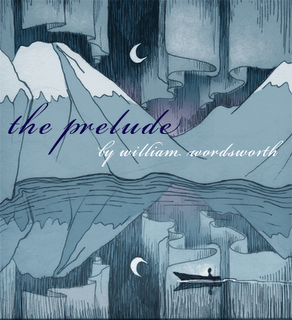
An extract from William Wordsworth's 'The Two-Part Prelude of 1799':


She was an elfin pinnace; twenty times
I dipped my oars into the silent lake,
And as I rose upon the stroke my boat
Went heaving through the water like a swan -
When, from behind that rocky steep (till then
The bound of the horizon) a huge cliff,
As if with voluntary power instinct,
Upreared its head. I struck, and struck again,
And, growing still in stature, the huge cliff
Rose up between me and the stars, and still,
With measured motion, like a living thing
Strode after me. With trembling hands I turned
And through the silent water stole my way
Back to the cavern of the willow-tree.
There in her mooring-place I left my bark,
And through the meadows homeward went with grave
And serious thoughts; and after I had seen
That spectacle, for many days my brain
Worked with a dim and undetermined sense
Of unknown modes of being. In my thoughts
There was a darkness - call it solitude,
Or blank desertion. No familiar shapes
Of hourly objects, images of trees,
Of sea or sky, no colours of green fields,
But huge and mighty forms that do not live
Like living men moved slowly through my mind
By day, and were the trouble of my dreams.


Monday, 3 December 2012

Words of the week #2


Digging


Between my finger and my thumb
The squat pen rests; snug as a gun.

Under my window, a clean rasping sound
When the spade sinks into gravelly ground:
My father, digging. I look down

Till his straining rump among the flowerbeds
Bends low, comes up twenty years away
Stooping in rhythm through potato drills
Where he was digging.

The coarse boot nestled on the lug, the shaft
Against the inside knee was levered firmly.
He rooted out tall tops, buried the bright edge deep
To scatter new potatoes that we picked,
Loving their cool hardness in our hands.

By God, the old man could handle a spade.
Just like his old man.

My grandfather cut more turf in a day
Than any other man on Toner’s bog.
Once I carried him milk in a bottle
Corked sloppily with paper. He straightened up
To drink it, then fell to right away
Nicking and slicing neatly, heaving sods
Over his shoulder, going down and down
For the good turf. Digging.

The cold smell of potato mould, the squelch and slap
Of soggy peat, the curt cuts of an edge
Through living roots awaken in my head.
But I’ve no spade to follow men like them.

Between my finger and my thumb
The squat pen rests.
I’ll dig with it.


-Seamus Heaney


Tuesday, 27 November 2012

Words of the week


Call yourself alive? Look, I promise you

that for the first time you’ll feel your pores opening

like fish mouths, and you’ll actually be able to hear

your blood surging through all those lanes,

and you’ll feel light gliding across the cornea

like the train of a dress. For the first time

you’ll be aware of gravity

like a thorn in your heel,

and your shoulder blades will ache for want of wings.

Call yourself alive? I promise you

you’ll be deafened by dust falling on the furniture,

you’ll feel your eyebrows turning to two gashes,

and every memory you have—will begin

at Genesis.


— “Temptation,” Nina Cassian (translated from Romanian by Brenda Walker & Andrea Deletant

Tuesday, 13 November 2012

Between Seasons

As November creeps upon us at a startling rate, I thought it appropriate to look at Anne Sexton's bleak and poignant November poem 'Double Image'. Detailing her feelings of insufficiency as a mother, daughter, and human being (the poem specifically references two failed suicide attempts) 'Double Image' is a thoughtful, troubling poem that locates the difficulties of familial relationships in a barren, autumnal setting. 'Double Image' is more like a triple image, Sexton's mother representing what she could not be, and her daughter representing what she cannot be. Neither stoical nor joyous, proper nor carefree, old nor young, Sexton occupies a transitory space. Like Autumn, suspended in between time, an ephemeral season, ill-defined, middling. Between the hot careless days of summer where days blur into one with no order and no need for order, sporadic. And the reverent chill of winter, with its coats and gloves and things which preserve. Sexton's seasons are blocks of wasted time, affirmations of her insignificance, periods to get through rather than to enjoy. Most importantly, they are markers of the distance between herself and her child; the missed years, missed birthdays, missed steps: the complete lack of Joy. 


I am thirty this November./You are still small, in your fourth year./We stand watching the yellow leaves go queer,/flapping in the winter rain,/falling flat and washed. And I remember/mostly the three autumns you did not live here./They said I’d never get you back again./I tell you what you’ll never really know:/all the medical hypothesis/that explained my brain will never be as true as these/struck leaves letting go./

- Anne Sexton, Double Image.

http://www.poetryfoundation.org/poem/238184 

JEM


Sunday, 11 November 2012

I Saw This And Thought of You...

...so said a post office advert a few years back.  Last week Lucian said something similar to me, something like 'I found a book in a charity shop I think would amuse you.'

Here is what it was:


And 'amuse' me it has.  Beginning with the blurb which quotes Maya Angelou:

'A falling leaf could stir her. / A wilting, dying rose / would make her write, both day and night, / the most rewarding prose. / She'd find a hidden meaning / in every pair of pants / then hurry home to be alone / and write about romance'

I have yet to read much, but the section headings promise a lot.  My favourites being 'The clitoris in my throat' and 'Queens of the Underworld'.
To me it seems like the perfect book for public transport.

Bon Voyage.

R.E. C.  x

Wednesday, 24 October 2012

The buzz word.


This week sees the announcement of the short-list for the TS Eliot prize for poetry. Amongst stalwarts such as Simon Armitage and Sharon Olds there is newcomer Sean Borodale, nominated for his poem-journal ‘The Bee Journal’, which was published in July. 

Borodale’s journal reminded me of the prolific amount of poems devoted to bees. I recently attended a reading by Carol Ann Duffy, who has also written a collection on Bees (‘The Bees). Duffy spoke of Bees as inspiring her with their productivity, community and naturalness. Duffy also made mention of another poet who wrote of Bees: Sylvia Plath. 


In the work of Borodale, Duffy and Plath we have three generations of poetry on Bees. Although Britain has changed substantially in that period, the nature of their poems remain somewhat similar. There is something about Bees then, which is unchanging, persevering, and resistant to outside influence. Their pre-historic preservation again the whirring wheel of time makes them a subject which I envision poets will write of for generations to come. 

‘27th August’
The spider's season opens,
rat tooth-marks appear;
almost just a tempering of vision.
So, in a coat
I go up to the ochre house of you in there.
How bees touch and re-align their touch.
Light in migration;
noise of a body in continual repair ...
by Sean Borodale.

‘The Bee Carol’
Silently on Christmas Eve,
the turn of midnight’s key;
all the garden locked in ice -
a silver frieze -
except the winter cluster of the bees.
Flightless now and shivering,
around their Queen they cling;
every bee a gift of heat;
she will not freeze
within the winter cluster of the bees.
Bring me for my Christmas gift
a single golden jar;
let me taste the sweetness there,
but honey leave
to feed the winter cluster of the bees.
Come with me on Christmas Eve
to see the silent hive -
trembling stars cloistered above -
and then believe,
bless the winter cluster of the bees.
by Carol Ann Duffy.

Sylvia Plath ‘The Arrival of the Bee Box’ - http://www.poemhunter.com/best-poems/sylvia-plath/the-arrival-of-the-bee-box/

JEM.